
Early on the morning of May 1st, I was roused from my sleep by the sound of a notification on my phone. It was my Australian partner reaching out; I frowned as soon as I saw the message: “What’s the minimum order quantity for bucket hats?” My partner was throwing another tricky request my way—likely involving a client with a pitifully small order volume. Still, I roused myself and got out of bed; even if the client was small-scale, we had to treat the inquiry seriously.
“If it’s a style we frequently produce, we can do it with an order of 300 caps.”
“The school commissioned these for the kindergarten students; the group is small—fewer than 80 children. We’re producing 300 units, which should cover about three years of supply. Please check your email; I’ve sent the details over.”
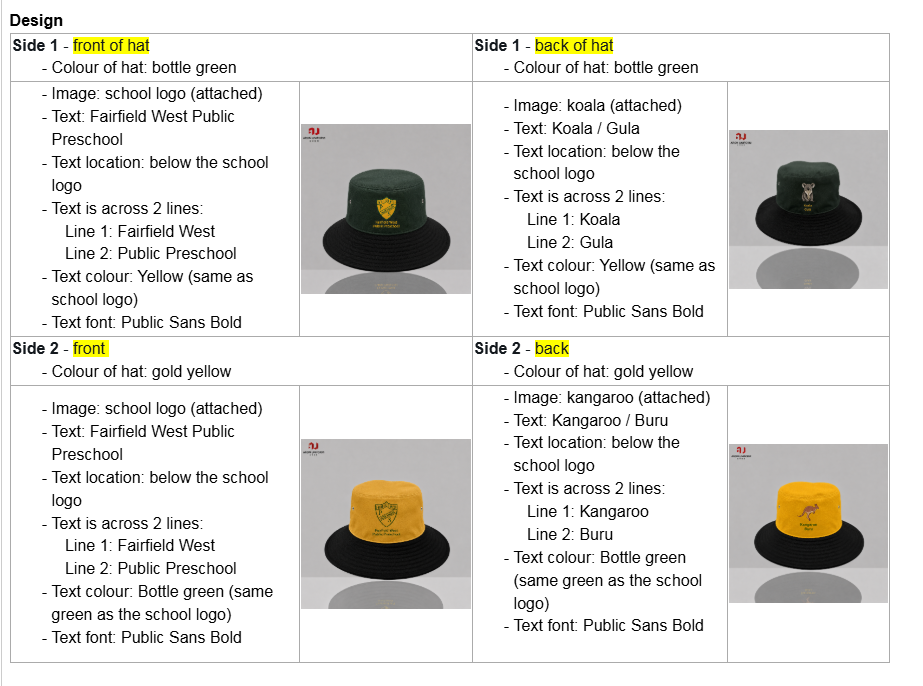
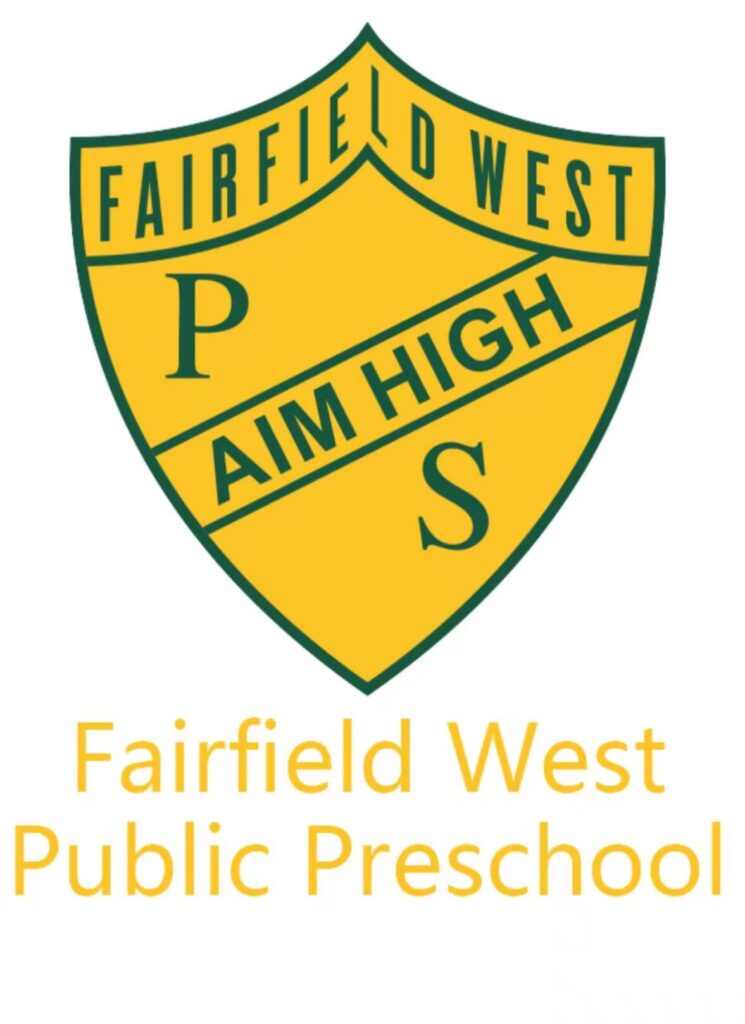
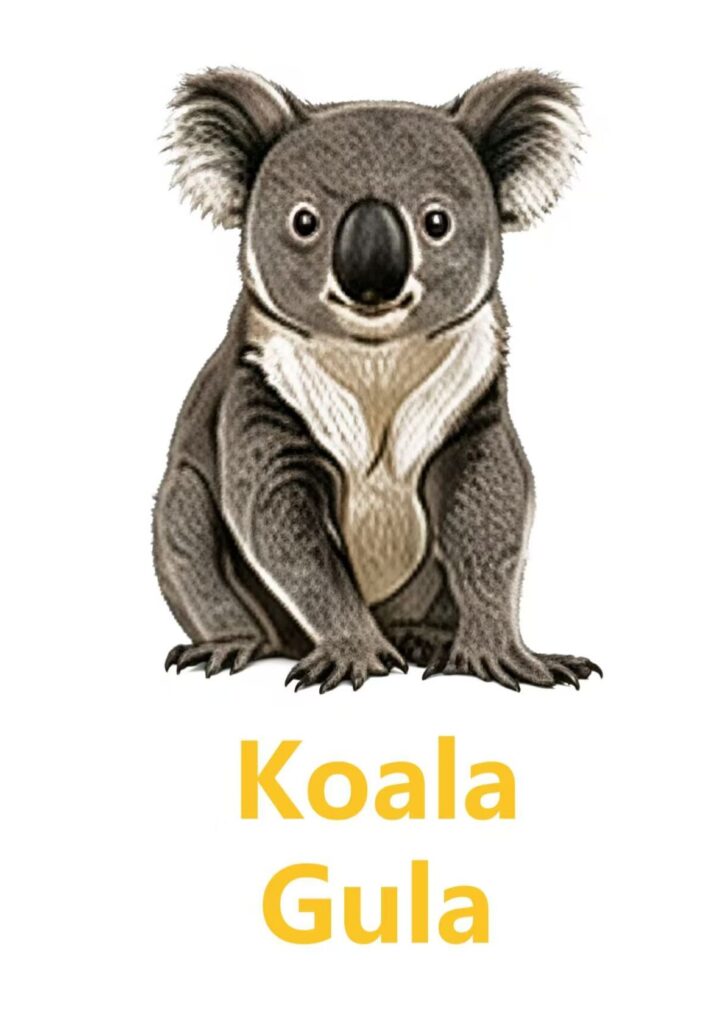
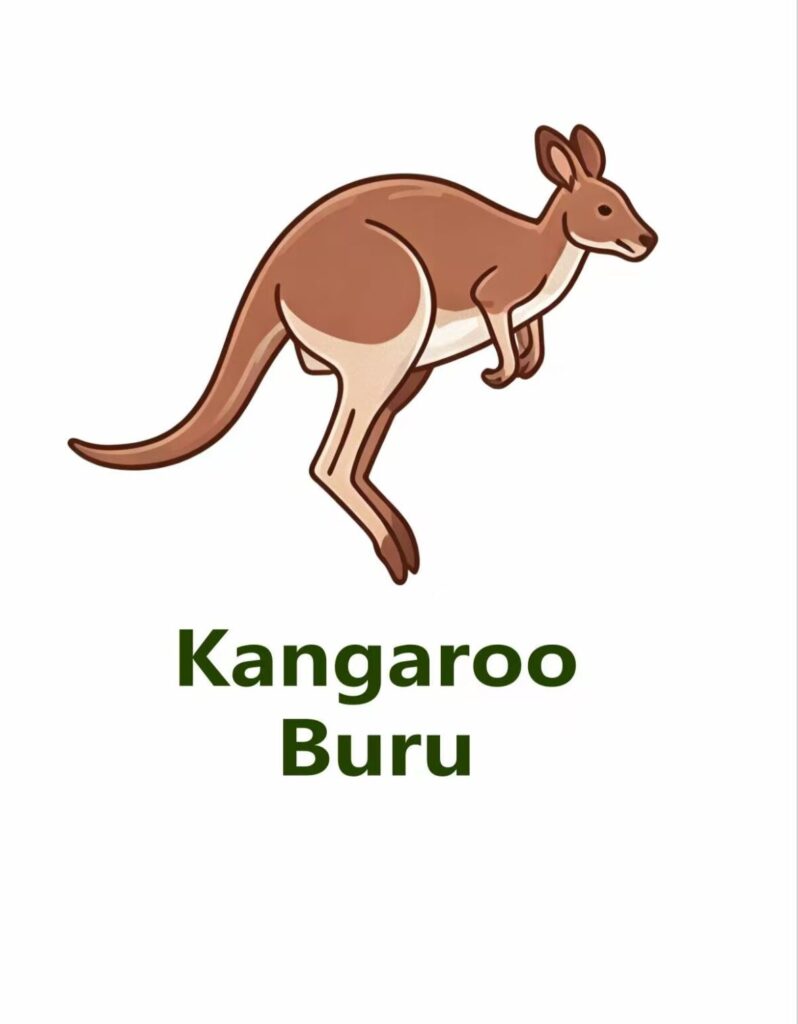
Today is the May Day holiday in China, yet my partner doesn’t want me to have a single moment of idleness. I opened my computer to find details for two hat designs—in two different colors—featuring custom graphics of a koala and a kangaroo. The specifications called for custom patterns for the school logos and animal motifs, as well as custom hat colors. While these production requirements posed no technical challenge for us, the order quantity of 300 units was rather small. I replied to my partner confirming it was no problem and that I would prepare for sample production once back at work.
Six days after the order was placed, the fabric for the hats was produced using heat transfer printing in the client-specified dark green and yellow; the school emblem was embroidered, and the animal design was applied via dye-sublimation transfer. The finished hats were delivered to my partner within four days, and upon inspection, they were extremely satisfied.
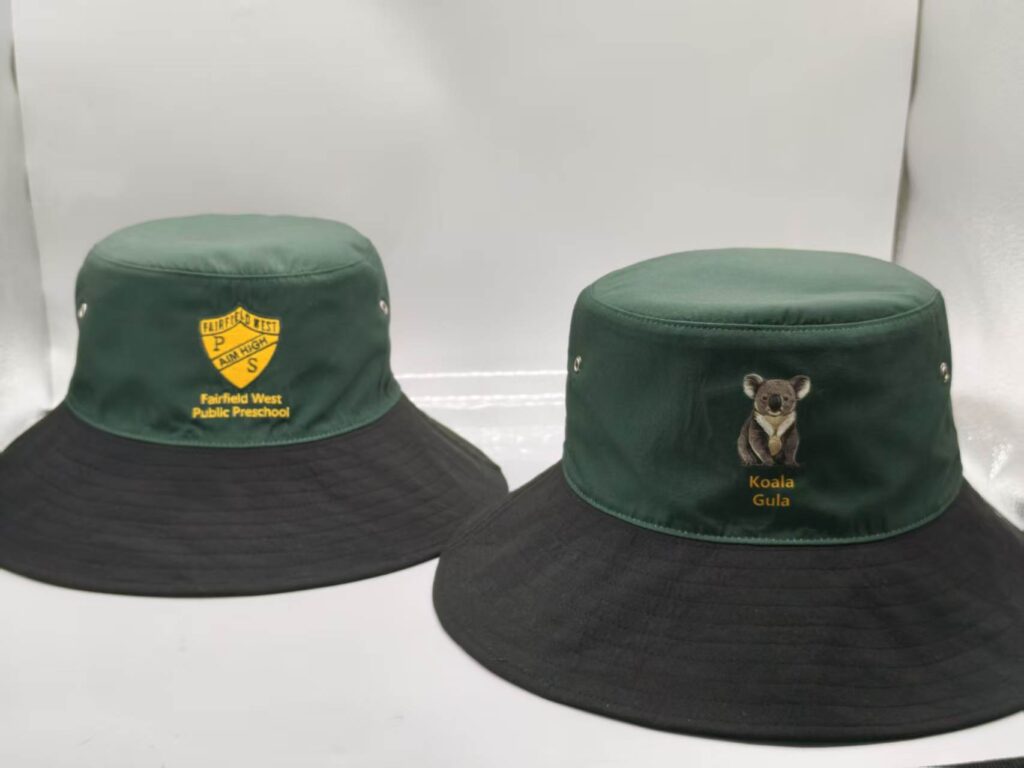
A few days later, my partner received an email reply from the school representative stating that the design needed revisions: the hat was to be made using two colors—dark green on one side and yellow on the other—making it reversible, and it required embroidery on both the front and back, featuring the school logo on the front and an animal design on the back.
Now I was truly facing a difficult problem, as the school’s budget for the hats was low, and my partner insisted that I keep costs down. The revised plan introduced three additional issues compared to the original:
Issue 1: Costs will inevitably increase.
Issue 2: The animal design features a multi-colored, gradient pattern that standard embroidery techniques cannot replicate. Achieving this gradient effect requires state-of-the-art technology—specifically, creating a white embroidery base followed by precision direct-to-garment printing. Currently, the cost of this process is extremely high and far exceeds the school’s budget.
Issue 3: The hat is designed to be reversible, with a significant color contrast between the two sides; there is a risk that stitching could penetrate through to the opposite side, potentially compromising the hat’s appearance.
I immediately communicated with the technical colleagues in the workshop to seek their assistance and obtained a temporary solution:
First, try using fabrics that look identical but have different weave structures to address Problem 3, while simultaneously adjusting the machine to achieve a tighter stitch formation.
Using standard embroidery techniques, the color scheme for the gradient sections was matched as closely as possible to the original design, though only an 80% resemblance could be achieved.
After proceeding, we quickly resolved “Problem Three” by changing to a more suitable fabric, achieving our goal. However, “Problem Two” didn’t go so smoothly. The first embroidered version we produced was far removed from the original design.
The embroiderer kept shaking his head, saying, “How can this be done well? Don’t even think about it, it won’t work.”
We didn’t give up. We communicated with the embroidery artist again, prepared for multiple revisions.
Our team remained highly motivated and didn’t back down.
We immediately made a second version.
Third version,
fourth version,
and finally, the fifth version—I’m finally seeing results; the complete hat pattern has been successfully created.
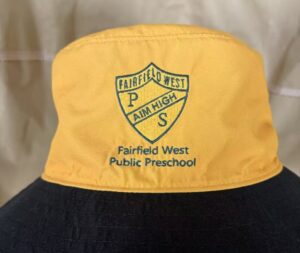
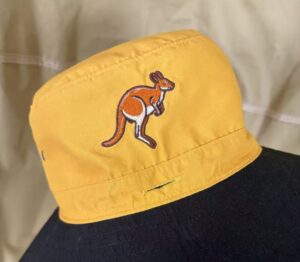
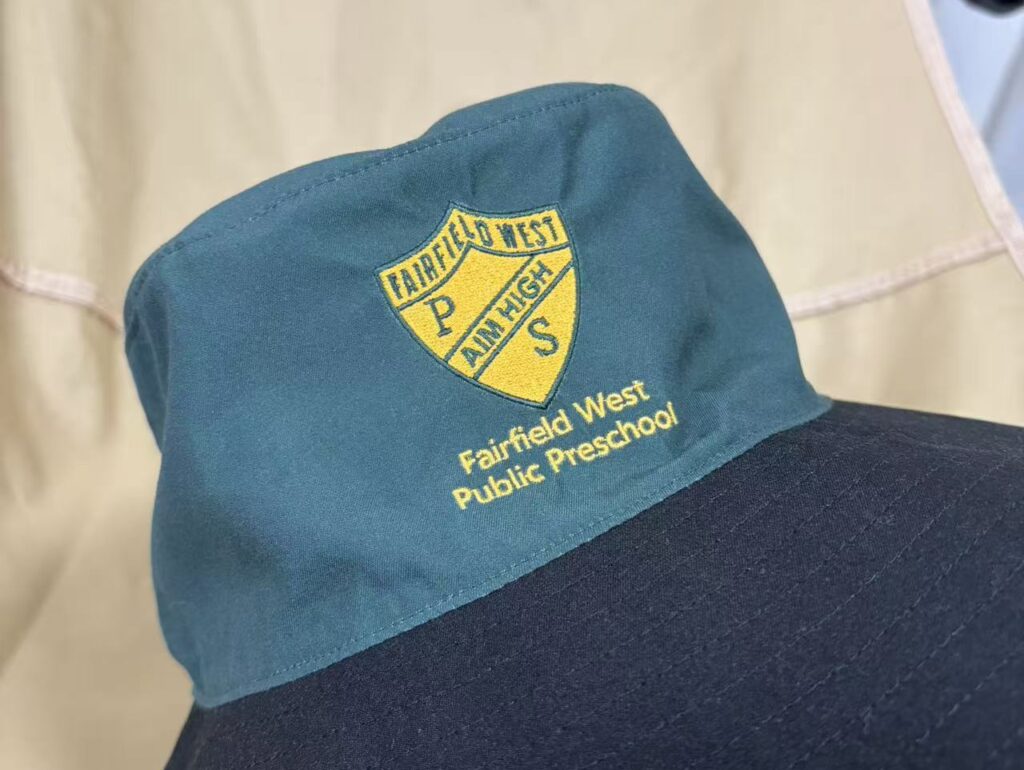
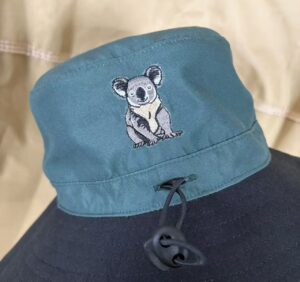
However, it ultimately exceeded the school’s budget; after we shipped the samples to them, they were satisfied with our product and agreed to increase the budget.